

 русский




Каковы технические особенности 400G QSFP-DD LR4?
С взрывным ростом облачных вычислений и моделей ИИ для работы с большими данными, а также с постепенным переходом от 5G к 6G, спрос на пропускную способность сети резко увеличился. От магистральных сетей до сетей городского масштаба, от межсоединений центров обработки данных (DCI) до корпоративных магистральных сетей, 400G стало «основным порогом» для высокоскоростной передачи. Среди них 400G QSFP-DD LR4, благодаря своим уникальным преимуществам для передачи на большие расстояния, стало «ключевым мостом», соединяющим все стороны.
Многие специалисты по эксплуатации и обслуживанию сетей (O&M) и закупкам интеграционных решений часто путают различные спецификации оптических модулей 400G, такие как LR4, FR4 и DR4. Сегодня мы дадим простое объяснение:
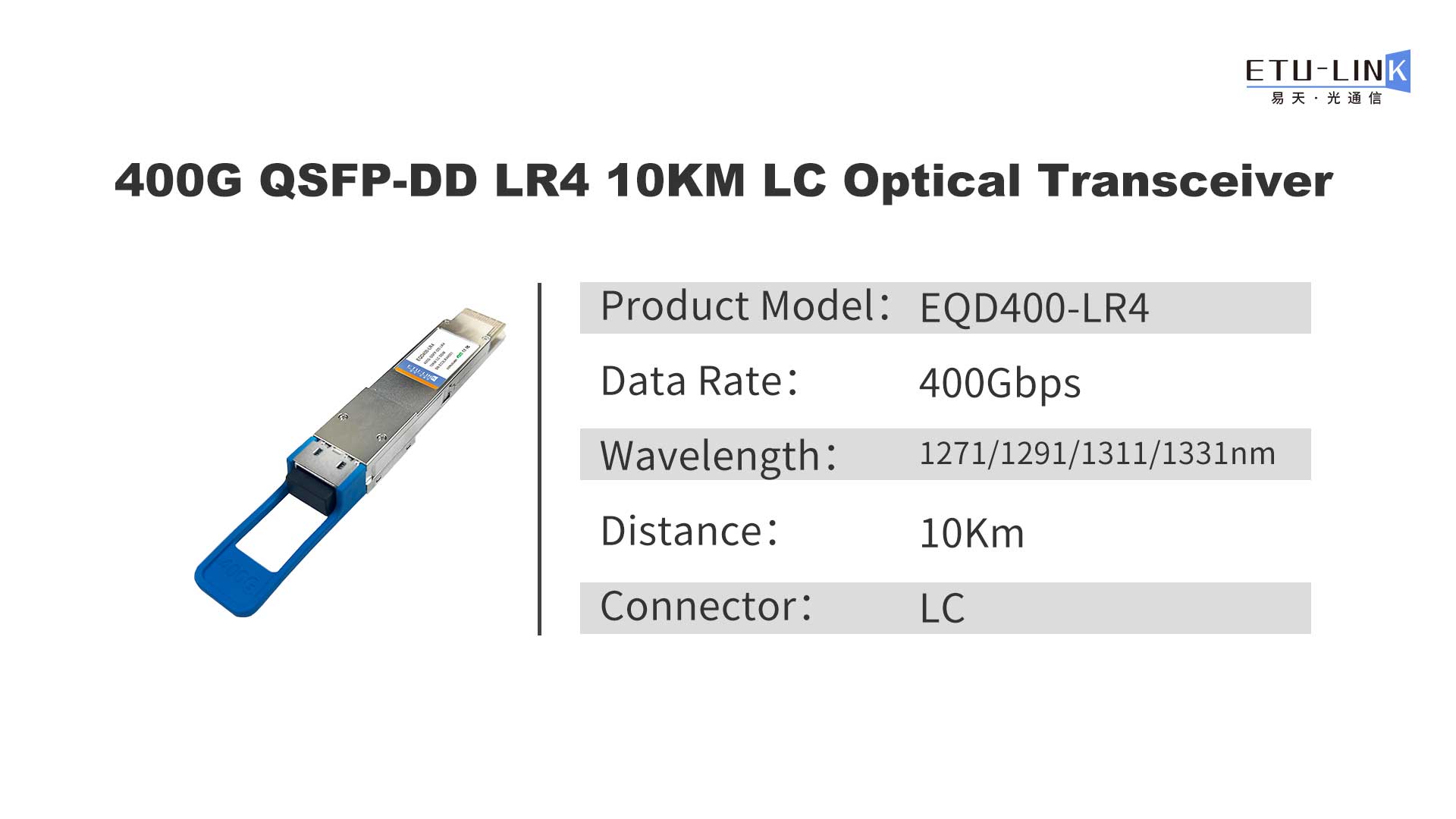
Что именно представляет собой 400G QSFP-DD LR4?
Что обеспечивает его возможности передачи на большие расстояния?
И к каким основным сценариям он может быть адаптирован?
Ⅰ.Что именно представляет собой 400G QSFP-DD LR4?
400G: Номинальная скорость передачи 400 Гбит/с, соответствующая требованиям передачи данных со сверхвысокой пропускной способностью;
QSFP-DD: Двухплотный четырёхканальный малогабаритный подключаемый корпус, являющийся развитием традиционного форм-фактора QSFP28, с удвоенным количеством контактов и повышенной плотностью пропускной способности; это основной форм-фактор для 400G.
LR4: Это стандарт передачи на большие расстояния с отраслевой стандартной дальностью передачи 10 км, совместимый с передачей по одномодовому оптоволокну.
II .Основная технология: передача на расстояние 10км на большие расстояния — 3 ключевые технологии
400G QSFP-DD LR4 обеспечивает стабильную передачу на расстоянии более 10 километров не за счёт простого «наращивания аппаратных средств», а благодаря высокоэффективной комбинации технологий, которую можно обобщить как трёхэтапный процесс «разделение, повышение скорости и коррекция ошибок»:
1. Раздельная передача: грубое волновое мультиплексирование CWDM4
Представьте автомагистраль, разделённую на четыре полосы, каждая из которых передаёт сигнал 100G, что в сумме даёт 400G. Используются четыре определённые длины волн (1271 нм, 1291 нм, 1311 нм и 1331 нм), расположенные с интервалом 20 нм для предотвращения взаимных помех, и они мультиплексируются через мультиплексор в одно одномодовое оптическое волокно. На принимающей стороне длины волн затем разделяются с помощью демультиплексирования для достижения «400G по одному волокну».
Ключевые преимущества: По сравнению с плотным волновым мультиплексированием (DWDM), не требуется сложное оборудование для охлаждения, что напрямую снижает затраты на 30%-50%, делая его особенно подходящим для чувствительных к стоимости сценариев, таких как сети городского масштаба и DCI.
2. Ключ к увеличению скорости: технология PAM4-модуляции
Традиционная передача использует кодирование NRZ, при котором один символ может передавать только 1 бит данных; в то время как PAM4 (четырёхуровневая импульсно-амплитудная модуляция) может передавать 2 бита на символ, фактически удваивая эффективность. Это означает, что для скорости передачи 400G не требуется чрезвычайно высокая символьная скорость; скорость передачи одного канала около 53 Гбод значительно снижает влияние дисперсии волокна и потерь в устройствах, что является основной причиной стабильной передачи на расстояние более 10 километров.
3. Надёжная гарантия: технология коррекции ошибок KP4 FEC
При передаче на большие расстояния потери сигнала и помехи неизбежны, что приводит к ошибкам битов. KP4 FEC действует как «автоматический корректор ошибок», автоматически выявляя и исправляя случайные ошибки во время передачи, фактически обеспечивая «двойную защиту» передачи данных.
III .Сравнение с аналогичными модулями
| Спецификации модуля | Дальность передачи | Тип |
Длина волны
(нм)
|
Разъём | Сценарии применения |
| 400G QSFP-DD SR8 | В пределах 100 м | Многомодовый | 850 | MPO-16 |
Короткие расстояния внутри центра обработки данных(ToR → серверная/серверная стойка)
|
| 400G QSFP-DD DR4 | 500 м | Одномодовый | 1310 | MPO-12 | Spine-Leaf, кластер ИИ, DCI в пределах 500 м |
| 400G QSFP-DD FR4 | 2 км | Одномодовый | 1271, 1291, 1311, 1331 | LC | Пересечение парков/зданий, DCI на средние и короткие расстояния |
| 400G QSFP-DD LR4 | 10 км | Одномодовый | 1271, 1291, 1311, 1331 | LC | Городской и междугородний DCI (≤10 км) |
IV. Итоги
В решении для передачи 400G позиционирование 400G QSFP-DD LR4 очень четкое: он не стремится к максимальной дальности (например, ER4 на 40 километров) и не ограничивается короткими расстояниями (например, SR8 на 100 метров), а ориентирован на наиболее часто используемый диапазон средних и дальних расстояний «10 километров», обеспечивая оптимальный баланс «пропускной способности, расстояния и стоимости».
Для специалистов по сетям четкое понимание его технических характеристик, применимых сценариев и ключевых моментов выбора позволяет эффективно избежать ошибок при прокладке кабелей и контролировать затраты на построение сети. В будущем, с распространением технологии 800G, 400G QSFP-DD LR4 продолжит выступать в качестве основного коммерческого модуля среднего диапазона, обслуживая различные сетевые проекты государственных организаций, предприятий и операторов.
Категории
Новый блог
Теги
новые продукты
Оптический трансивер 800G OSFP 2×DR4 1310nm 500M MPO12 с DDM Читать далее
100G QSFP28 ZR4 BIDI 80KM LC оптический трансивер Читать далее
Оптический трансивер 1.25G SFP 1550 нм 200 км LC Читать далее
Оптический трансивер 10G SFP+ ZR 1550 нм 120 км LC Читать далее
Оптический приемопередатчик 100G QSFP28 LR с одинарной лямбдой 10 км LC Читать далее
Оптический приемопередатчик 25G SFP28 ZR 1310 нм 80 км LC Читать далее
Оптический приемопередатчик 100G QSFP28 ZR4 80KM LC поколения II Читать далее
Оптический приемопередатчик 100G QSFP28 BIDI 40 км LC Читать далее
По вопросам о наших продуктах или прайс-листе, пожалуйста, оставьте нам, и мы свяжемся с вами в течение 24 часов.


 Factory: Right Side Of 3rd Floor, No. 102 Building, Longguan Expressway, Dalang Street, Longhua District, Shenzhen
Office: Floor 4, Building 4, Nanshan Yungu Phase ll, Taoyuan Community, XiliStreet,Nanshan District, Shenzhen
© Авторские права: 2026 ETU-Link Technology CO ., LTD Все права защищены.

Поддерживается сеть IPv6


